

𝗗𝗼𝗻’𝘁 𝗖𝘂𝘁 𝗬𝗼𝘂𝗿 𝗪𝗶𝗻𝗻𝗲𝗿𝘀 𝗧𝗼𝗼 𝗦𝗼𝗼𝗻: 𝗔 𝗖𝗼𝘀𝘁𝗹𝘆 𝗖𝗹𝗮𝘀𝘀𝗶𝗰 𝗠𝗶𝘀𝘁𝗮𝗸𝗲
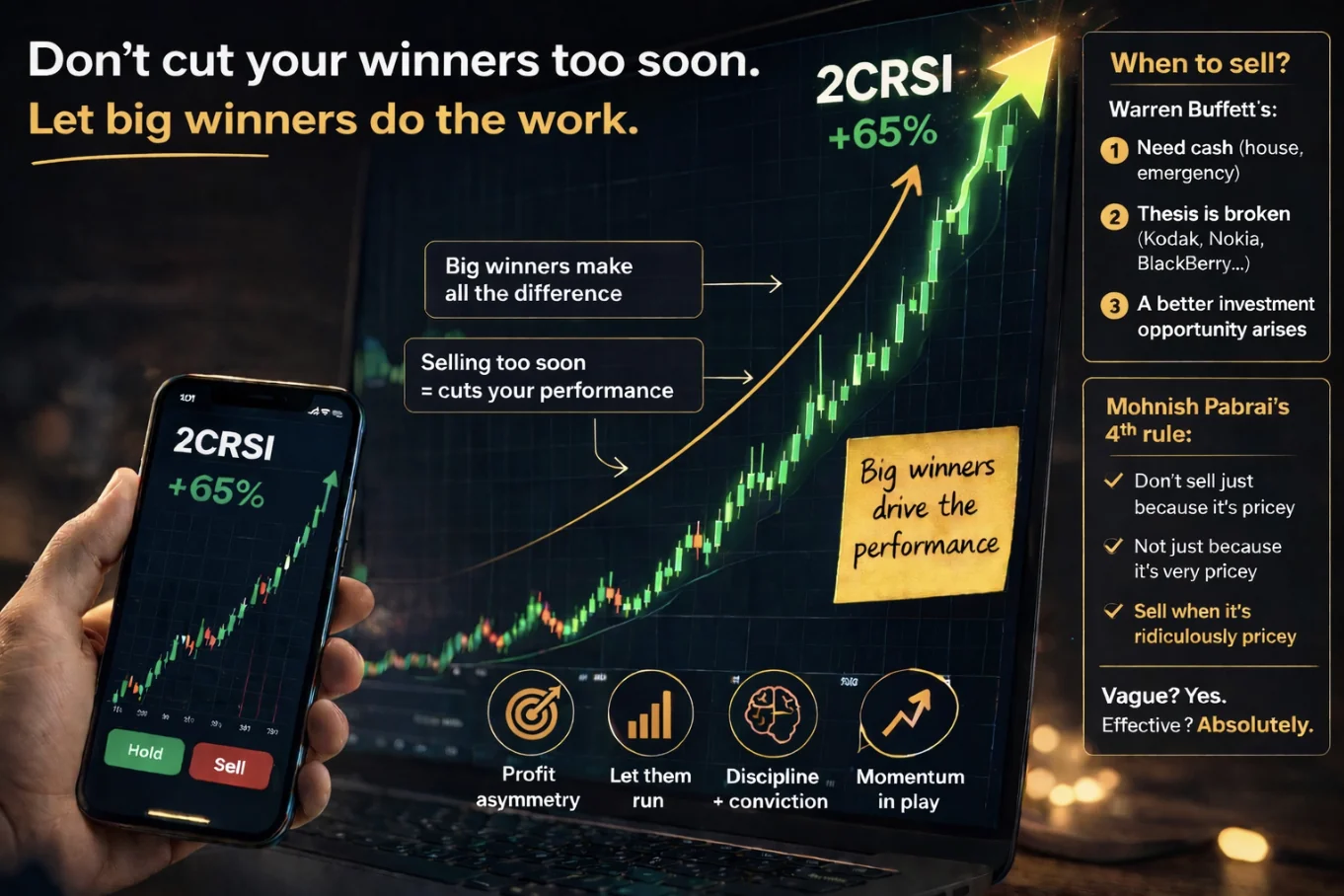
𝗗𝗼𝗻’𝘁 𝗖𝘂𝘁 𝗬𝗼𝘂𝗿 𝗪𝗶𝗻𝗻𝗲𝗿𝘀 𝗧𝗼𝗼 𝗦𝗼𝗼𝗻: 𝗔 𝗖𝗼𝘀𝘁𝗹𝘆 𝗖𝗹𝗮𝘀𝘀𝗶𝗰 𝗠𝗶𝘀𝘁𝗮𝗸𝗲
𝗔𝗽𝗿𝗶𝗹 𝟭𝟬, 𝟮𝟬𝟮𝟲
Many retail investors have the reflex to sell a position as soon as it reaches +20%, +30%, or +50%. It feels prudent… but in reality, it’s often a mistake that hurts long-term performance.
𝗪𝗵𝘆?
Markets are asymmetric:
A stock can lose at most 100%, but it can gain +200%, +500%, or even +2000%.
👉 A small minority of stocks generate the majority of returns.
Big winners make all the difference:
Research by Hendrik Bessembinder shows that a handful of stocks account for most of the wealth creation.
👉 Selling them too early cuts your performance.
You damage your risk/reward ratio:
Limiting gains while letting losses run reduces your expected return.
A powerful psychological bias:
The disposition effect (Terrance Odean) pushes investors to sell winners too early and hold onto losers too long.
Momentum works against you:
Stocks that go up tend to keep going up (research by Narasimhan Jegadeesh and Sheridan Titman).
👉 Selling too early means exiting a winning trend.
Selling a winner just because it has “already gone up a lot” is not an optimal strategy.
𝗪𝗵𝗮𝘁 𝗿𝗲𝗮𝗹𝗹𝘆 𝗺𝗮𝘁𝘁𝗲𝗿𝘀:
let your best investments run
cut mistakes when necessary
think long-term rather than seeking short-term comfort
When should you sell?
𝗔𝗰𝗰𝗼𝗿𝗱𝗶𝗻𝗴 𝘁𝗼 𝗪𝗮𝗿𝗿𝗲𝗻 𝗕𝘂𝗳𝗳𝗲𝘁𝘁, 𝘁𝗵𝗲𝗿𝗲 𝗮𝗿𝗲 𝟯 𝗿𝗲𝗮𝗹 𝗿𝗲𝗮𝘀𝗼𝗻𝘀 𝘁𝗼 𝘀𝗲𝗹𝗹:
1. You need cash
Buying a house, covering an unexpected expense, etc.
2. The investment thesis is broken
Examples:
Kodak disrupted by digital technology
Nokia and BlackBerry overtaken in smartphones, notably by Apple
3. A better opportunity arises
An investment with a superior risk/reward profile.
𝗔 𝟰𝘁𝗵 𝗿𝘂𝗹𝗲 (𝗶𝗻𝘀𝗽𝗶𝗿𝗲𝗱 𝗯𝘆 𝗠𝗼𝗵𝗻𝗶𝘀𝗵 𝗣𝗮𝗯𝗿𝗮𝗶)
I’d like to share a rule I find particularly powerful:
👉 You don’t sell just because a stock is “expensive.”
A stock can be expensive → you may not want to buy it, but that’s not a reason to sell
It can be very expensive → growth can justify the price
👉 You sell when it becomes “ridiculously expensive”
Yes, it’s intentionally vague.
And that’s exactly the point.
👉 There is no magic threshold like +50% or +100%.
👉 It’s about judgment, conviction, and long-term vision.
I’ll repeat it on purpose:
this mindset is, in my view, the best way to let big winners do the heavy lifting.
$NSDQ100 $SPX500 $ENR.DE $AL2SI.PA $NFLX $MU
⚠️ 𝘙𝘪𝘴𝘬 𝘞𝘢𝘳𝘯𝘪𝘯𝘨:
𝘛𝘩𝘪𝘴 𝘪𝘴 𝘢 𝘱𝘦𝘳𝘴𝘰𝘯𝘢𝘭 𝘴𝘵𝘳𝘢𝘵𝘦𝘨𝘺, 𝘯𝘰𝘵 𝘧𝘪𝘯𝘢𝘯𝘤𝘪𝘢𝘭 𝘢𝘥𝘷𝘪𝘤𝘦. 𝘞𝘩𝘦𝘵𝘩𝘦𝘳 𝘺𝘰𝘶 𝘢𝘱𝘱𝘭𝘺 𝘪𝘵 𝘰𝘳 𝘯𝘰𝘵 𝘪𝘴 𝘺𝘰𝘶𝘳 𝘤𝘩𝘰𝘪𝘤𝘦. 𝘗𝘢𝘴𝘵 𝘱𝘦𝘳𝘧𝘰𝘳𝘮𝘢𝘯𝘤𝘦 𝘥𝘰𝘦𝘴 𝘯𝘰𝘵 𝘨𝘶𝘢𝘳𝘢𝘯𝘵𝘦𝘦 𝘧𝘶𝘵𝘶𝘳𝘦 𝘳𝘦𝘴𝘶𝘭𝘵𝘴.